Cold Plunge for Migraines: What the Research Actually Shows (2026)
By IceColdTubs · Updated September 9, 2026
Quick answer: Localized cold application has real trial evidence behind it — an October 2025 randomized controlled trial found a cold gel pack applied to the forehead, temples, and neck significantly reduced monthly migraine attacks (6.07 to 2.92) compared to relaxation exercises alone (p=.021). But that’s a 15-minute gel pack, not a full cold plunge, and no study has tested whole-body immersion against migraine specifically. There’s also a safety wrinkle most cold-plunge content skips: a population-based study found migraineurs have a 46% lifetime prevalence of fainting (syncope) versus 31% in non-migraineurs, and cold plunging triggers its own documented blood-pressure spike — a combination worth knowing about before you assume “cold helps my headaches” extends to a full tub.
Search “cold plunge migraine” and most of what comes back is wellness-brand blogs claiming cold immersion “releases endorphins” or “resets the nervous system” for headache relief, with no citation attached. The actual clinical evidence tells a narrower, more useful story: cold does help migraine, but only in a specific, localized form that’s never been tested as a full-body plunge — and full immersion carries its own safety consideration for migraine sufferers that has nothing to do with the headache itself.
New to cold and heat exposure for a health condition generally? Our sauna and migraines guide covers the heat side of this same question, including why abrupt temperature swings in either direction are a recognized trigger. Managing a different chronic-pain condition with cold plunging? Our cold plunge for back pain guide covers a similar evidence-by-format breakdown.
The actual evidence: localized cold, not immersion
The strongest, most current evidence is a randomized controlled trial published October 3, 2025 in Medicine (Baltimore) (104(40):e44760). Researchers split 26 people with migraine without aura into two groups: one did Jacobson Progressive Muscle Relaxation (JPMR) alone, the other did JPMR plus a cold gel pack — stored at 4°C, applied by hand to the forehead (4 minutes), both temples (4 minutes each), and the back of the head and neck (3 minutes), for 15 minutes total following the relaxation exercises.
Both groups improved over the 4-week intervention. But the group getting cold application on top of relaxation saw a significantly larger drop in monthly migraine attacks:
| Outcome | JPMR alone (n=13) | JPMR + cold application (n=13) |
|---|---|---|
| Monthly migraine attacks (before → after) | 5.84 → 3.38 | 6.07 → 2.92 |
| Between-group difference | — | p=.021 (large effect, partial η²=0.21) |
| Pain intensity (VAS, before → after) | 8.38 → 6.15 | 9.08 → 4.62 (difference not significant, p=.395) |
This builds on an earlier finding: a 2013 randomized crossover trial in the Hawaii Journal of Medicine & Public Health (Sprouse-Blum et al., n=55) found a frozen neck wrap targeting the carotid arteries, applied at migraine onset, produced a 31.8% average pain decrease at 30 minutes versus a 31.5% average pain increase in the control group.
Notice what both trials have in common: a small, targeted cold application to the head and neck, not a body-length plunge into cold water. The researchers behind the 2025 trial explicitly flagged this as a limitation of their own study, along with the modest sample size (26 people) and the fact that it only tested migraine without aura. Neither trial — nor any other published research — has tested full-body cold-water immersion against migraine.
Why “localized” and “whole-body” aren’t interchangeable
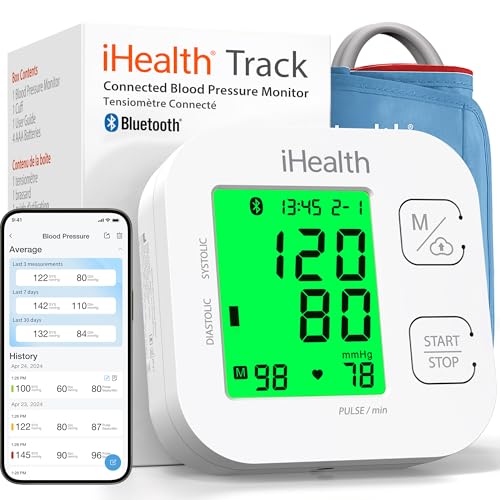
Home Blood Pressure Monitor
Why we like it: if you get migraines and want to try cold plunging, checking your resting blood pressure before and after a session gives you real data on how your body handles the cold-shock spike, instead of guessing.
Check Price on Amazon →Ten minutes in the cold goes faster with a great story in your ears — start a free Audible trial and get your first audiobook free.
A forehead gel pack or a frozen neck wrap doesn’t touch your cardiovascular system the way a full cold plunge does. Whole-body cold-water immersion triggers the cold shock response — a well-documented, sharp physiological event. Research building on physiologist Michael Tipton’s cold-shock work has recorded mean blood pressure spiking from a resting 130/76 mmHg to as high as 175/93 mmHg within the first minute of immersion, alongside a heart rate jump before it settles. That’s a real cardiovascular event a localized cold pack simply never produces, which is why the trial evidence for one format can’t be assumed to transfer to the other.
The syncope risk most cold-plunge content skips
Here’s the part that’s genuinely underdiscussed: migraine itself is independently associated with a higher lifetime risk of fainting. The population-based CAMERA study (Kruit et al., Neurology, 2006), comparing 323 migraineurs against 153 non-migraine controls, found migraineurs had a 46% lifetime prevalence of syncope, versus 31% in controls — and migraine with aura specifically was significantly associated with that elevated risk, independent of other cardiovascular factors.
That matters here because cold-water immersion’s own blood-pressure swing is a recognized trigger for vasovagal responses (the same broad category of “your blood pressure and heart rate drop suddenly, you feel lightheaded or faint” that syncope describes). Combining a baseline population already more prone to fainting with an intervention that produces its own acute cardiovascular jolt isn’t a reason to avoid cold plunging outright — but it’s a legitimate, specific reason to ease in gradually, never plunge alone, and talk to a doctor first if you have migraine with aura or any personal history of fainting or lightheadedness. Most cold-plunge marketing frames the cold-shock blood-pressure spike as a general caution for “anyone with heart conditions” without ever mentioning that migraine itself is on the list of things that raise your baseline risk.
Migraine and cold therapy, by the numbers
- 6.07 to 2.92 monthly attacks — the reduction seen in the group combining relaxation exercises with a 15-minute cold gel pack to the forehead, temples, and neck, versus 5.84 to 3.38 for relaxation alone (p=.021), per an October 2025 RCT in Medicine (Baltimore).
- 46% vs. 31%. Lifetime prevalence of syncope (fainting) in migraineurs versus non-migraine controls, per the population-based CAMERA study (Neurology, 2006) — with migraine with aura specifically flagged as an associated risk factor.
- 130/76 → 175/93 mmHg in under a minute. The documented blood-pressure spike from cold-water immersion (research building on Tipton’s cold-shock-response work) — an acute cardiovascular event a localized cold pack doesn’t produce.
The bottom line
- Localized cold has real trial evidence for migraine — a 2025 RCT found a cold gel pack to the head and neck, combined with relaxation exercises, significantly reduced monthly attacks versus relaxation alone.
- A full cold plunge has never been tested against migraine specifically — every piece of clinical evidence used small, targeted cold applications, not whole-body immersion.
- Migraine is linked to a higher baseline fainting risk — a population-based study found 46% lifetime syncope prevalence in migraineurs versus 31% in controls, more so with migraine with aura.
- Cold plunging adds its own acute blood-pressure spike on top of that baseline — a real, specific reason to ease in gradually and check with a doctor first, not just a generic “consult your physician” footnote.
- During an active attack, the evidence-backed move is a localized cold pack, not a full tub — that’s the format every relevant trial actually tested.
Curious how heat compares? Our sauna and migraines guide covers why heat is a more common trigger and what the tension-headache research does and doesn’t tell you. Managing anxiety alongside migraines? Our sauna for anxiety guide covers a different heat-based mechanism. Ready to compare tubs for general use? See our best cold plunge tubs guide, or start with the fundamentals in our cold plunge benefits guide.
🛒 Top Picks from This Guide


Browse all our picks →🔥 Today's deals →
Product prices and availability are accurate as of the date/time indicated on each product and are subject to change. Any price and availability information displayed on Amazon.com at the time of purchase will apply to the purchase of this product. As an Amazon Associate we earn from qualifying purchases.