Does Sauna Help You Lose Weight? What the Science Says (2026)
By IceColdTubs · Updated September 17, 2026
Quick Answer: A sauna session burns a real but modest number of calories — a 2019 peer-reviewed study measured 73 to 131 kcal per 10-minute session (about 413 kcal total across 40 minutes) in overweight men — but almost all of the weight that disappears from the scale afterward is water, not fat. The same researchers found sauna use caused no significant change in body fat or lean mass, only a 0.65 kg fluid loss that returns once you rehydrate. A sauna can be a reasonable recovery add-on to a real diet-and-exercise plan; it isn’t a fat-loss method on its own.
“Does sauna help you lose weight” is one of the most searched questions in heat therapy, usually next to before/after scale photos taken minutes apart. Here’s what a real peer-reviewed sauna study measured — calories, heart rate, and fluid loss — and why the number on the scale isn’t the number that matters.
What an actual sauna-and-weight study measured
Most of what circulates online about “sauna calories” traces back to one real study: Podstawski et al. (2019), published in BioMed Research International, which put 45 sedentary, overweight young men (average BMI 26.55, average age 20.76) through four 10-minute dry sauna sessions at 90-91°C with 14-16% humidity, separated by 5-minute cooling breaks.
The energy expenditure numbers climbed with each round: 73.04 kcal in the first session, 93.82 kcal in the second, 114.91 kcal in the third, and 131.40 kcal in the fourth — a total of roughly 413 kcal across 40 minutes of heat exposure. Heart rate climbed right alongside it, from an average of 98 bpm in session one to 133.36 bpm by session four, a zone the researchers classified as “difficult effort,” approaching near-maximal intensity for sedentary subjects.
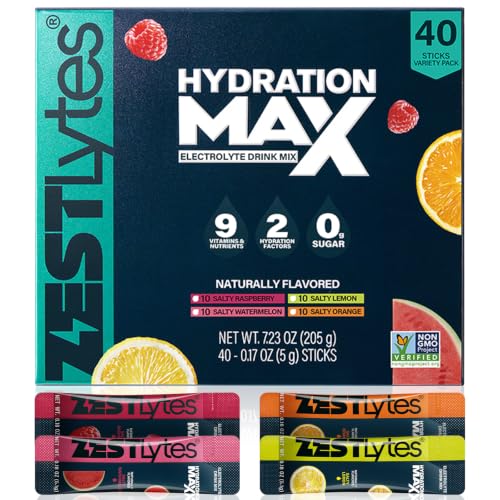
Electrolyte Hydration Packets
Why we like it: the fluid loss from a sauna session is real and needs replacing — a fast-mixing electrolyte packet before or after your session is a cheap, practical way to rehydrate properly instead of just drinking plain water.
Check Price on Amazon →Building a real recovery routine around your training means gear that shows up when you need it — try Prime free for 30 days for free two-day delivery on electrolyte mixes, a scale, or whatever else rounds out your routine.
Why that calorie number isn’t the same as fat loss
A number like 413 kcal sounds like real progress — it’s comparable in magnitude to Harvard Health’s chart estimate of about 133 calories for a 155-lb person walking 3.5 mph for 30 minutes. But the mechanism is completely different. In the sauna study, that energy expenditure came from your cardiovascular system working overtime to dump heat: faster heart rate, redirected blood flow to the skin, and increased sweat production. It is not your body reaching for fat stores as fuel the way sustained aerobic exercise does.
The clearest evidence of that distinction is what the study found on body composition: the 45 men showed no statistically significant change in body fat percentage or lean mass from the sauna protocol. The researchers were explicit that whatever weight loss showed up on the scale came from one place — water.
The number on the scale is fluid, not fat
Over the full 60-minute protocol, participants lost a statistically significant 0.65±0.24 kg of body mass — about 0.75% of their average 85.86 kg body weight (p<0.001). The study’s authors stated plainly that this “body mass loss can be attributed mainly to the loss of body water,” not fat, and flagged it as a genuine health consideration: overweight individuals lose fluid disproportionately and should replenish it during and after sauna bathing, not treat the drop as progress.
That’s consistent with what every credible source on the topic agrees on: a sauna session can shift a pound or more of water weight through sweat, and it comes right back the moment you rehydrate. If your bathroom scale reads lower 20 minutes after a sauna, you’re reading a hydration number, not a fat-loss number.
| Claim | What the evidence shows |
|---|---|
| A sauna session burns calories | Yes — 73 to 131 kcal per 10-minute session, ~413 kcal across 40 minutes (Podstawski et al., 2019) |
| Those calories come from fat loss | No — driven by cardiovascular/thermoregulatory effort, not fat oxidation |
| The scale-weight drop after a session is real fat loss | No — it’s fluid loss (0.65 kg, ~0.75% of body mass), regained on rehydration |
| Sauna use changes body fat or lean mass | Not in this study — no significant change measured |
| Sauna can support a weight-management routine | Yes, as a recovery add-on alongside diet and exercise — not a replacement for either |
Does carrying more weight change the numbers?
A separate, later study by the same lead researcher — Podstawski et al. (2022, Biology, Basel) — put 60 male university students through a single 10-minute sauna session at the same 90°C/14-16% humidity protocol, split into two groups of 30: normal body mass and Class 1 obesity. The obese group burned noticeably more per session — 92.37 kcal versus 66.80 kcal for the normal-weight group — driven by a higher average heart rate (102.60 bpm vs. 94.73 bpm) and higher estimated VO₂ (15.73 vs. 13.67 mL/kg/min). Blood pressure rose slightly more in the obese group too (systolic +2.40 mmHg vs. +0.87 mmHg), but both groups stayed well within normal range. The authors’ own conclusion: a 10-minute, 90°C sauna session is safe even for men with Class 1 obesity. That higher calorie burn doesn’t change the core finding above — it’s still cardiovascular effort, not fat metabolism — but it does mean a heavier person’s sauna “calorie number” looks even bigger, and the safety data suggests that’s not a reason to skip the sauna, just a reason to rehydrate proportionally more.
Where a sauna can honestly fit into weight management
None of this means a sauna is useless if weight is part of your goal — it just isn’t a fat-loss tool by itself. Post-workout sauna sessions are a low-impact way to add relaxation and cardiovascular conditioning on top of a training routine that’s already creating the calorie deficit that drives real weight loss. Our sauna for beginners guide covers safe starting session lengths and frequency if you’re new to the heat, and if fat loss specifically is the goal, our cold plunge for weight loss breakdown covers the cold-exposure side of the same question — cold plunging shows a similarly modest, real-but-limited effect through a completely different mechanism (brown fat activation rather than sweat-driven fluid loss).
Sauna and weight loss, by the numbers
- 73.04 to 131.40 kcal. Energy expenditure per 10-minute dry sauna session (90-91°C), rising across four successive rounds (Podstawski et al., 2019).
- ~413 kcal. Total energy expenditure across the full 40 minutes of sauna heat in the same study.
- 98 to 133 bpm. Average heart rate climbing from session one to session four — a “difficult effort” zone driven by thermoregulation, not fat metabolism.
- 0.65±0.24 kg. Statistically significant (p<0.001) body mass lost over the 60-minute protocol — attributed by the study’s authors mainly to water, not fat.
- 0%. The study found no statistically significant change in actual body fat or lean mass from the sauna sessions.
- ~133 kcal. Harvard Health’s estimate for a 155-lb person walking 3.5 mph for 30 minutes — a useful, evidence-based comparison point for the sauna’s calorie burn.
- 92.37 vs. 66.80 kcal. Energy expenditure in a single 10-minute, 90°C sauna session for men with Class 1 obesity versus normal-weight men (Podstawski et al., 2022, Biology) — higher effort, not more fat burned.
Last updated September 17, 2026: added 2022 follow-up data comparing sauna response in obese vs. normal-weight men.
The bottom line
- A sauna session burns real calories — roughly 413 kcal across four 10-minute rounds in a peer-reviewed study — but that energy expenditure is driven by cardiovascular effort, not fat metabolism.
- The weight you lose in a sauna is water, not fat. The same study measured a significant 0.65 kg fluid loss with no significant change in body fat or lean mass.
- That water weight comes right back once you rehydrate, so don’t read a post-sauna scale drop as progress.
- A sauna can still support a weight-management routine as a recovery tool layered on top of real diet and exercise — just not as a substitute for either.
- Hydrate before and after every session, especially if you’re overweight, since fluid loss doesn’t scale down proportionally with body size and dehydration risk is real.
New to sauna sessions generally? Our sauna for beginners guide covers safe session length, temperature, and hydration before you build a routine. Curious how the heat affects hormones rather than weight? Our sauna and testosterone breakdown covers that separate, commonly conflated question.
🛒 Top Picks from This Guide


Browse all our picks →🔥 Today's deals →
Product prices and availability are accurate as of the date/time indicated on each product and are subject to change. Any price and availability information displayed on Amazon.com at the time of purchase will apply to the purchase of this product. As an Amazon Associate we earn from qualifying purchases.