Sauna for Insomnia: Does Heat Therapy Actually Help You Sleep? (2026)
By IceColdTubs · Updated August 22, 2026
Quick Answer: No trial has tested sauna specifically on diagnosed insomnia yet — that gap is real. But UCSF, backed by NIH/NCCIH funding, is running exactly that study right now: a 2026 feasibility trial (n=10) paired a sauna blanket with digital CBT-I, and a larger randomized follow-up (target n=40) is currently recruiting, with results not expected before 2027. Until then, the closest real evidence is adjacent: a 2022 trial in diagnosed insomnia patients found localized pre-bed warming cut sleep-onset time by about 8.5 minutes (p=0.021), and a 2019 meta-analysis of warm baths/showers found the same 1-2 hours before bed shortened sleep onset by roughly 10 minutes. Neither used a sauna, but both point to the same heat-then-cooldown mechanism a sauna also triggers.
Search “sauna for insomnia” and you’ll find plenty of confident claims about heat curing sleepless nights. Here’s what’s actually been studied, what’s currently being studied, and what’s still just a plausible mechanism dressed up as a finding.
The honest starting point: the trial you’d want doesn’t exist yet — but it’s being run right now
We looked for a controlled study testing sauna use directly against diagnosed insomnia. There isn’t one completed yet. What does exist is genuinely notable: UCSF, with NIH/NCCIH funding, registered a feasibility trial (NCT06626048, n=10, adults meeting Insomnia Severity Index ≥11) combining a sauna blanket — 15-minute sessions at least 3x/week, 1-2 hours before bed — with a digital CBT-I program. It completed in January 2026, but results haven’t been published yet. A larger randomized follow-up (NCT07036705, target n=40, adults with DSM-based insomnia disorder) comparing CBT-I alone against CBT-I plus sauna-blanket heating is recruiting now, with an estimated completion of July 2027. That’s the trial worth watching — not one to cite for results, since there aren’t any yet.
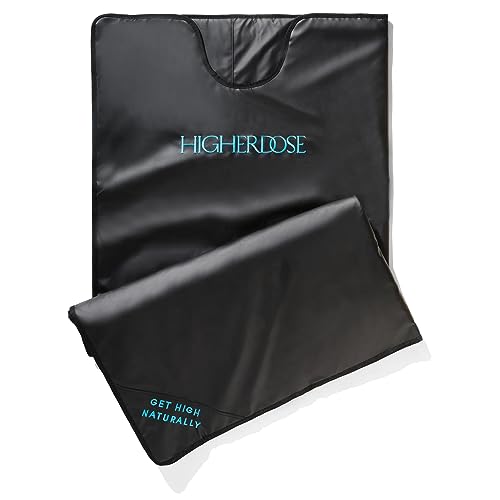
Infrared Sauna Blanket
Why we like it: the same lower-cost, at-home format UCSF is using in its ongoing insomnia trial — pair sessions with our sauna for beginners guide for safe timing.
Check Price on Amazon →A pre-bed sauna session goes faster with a good story queued up — start a free Audible trial and get your first audiobook free for wind-down listening.
The closest real evidence: adjacent heat therapy, not sauna itself
Two studies are worth taking seriously because they’re on real sleep-difficulty populations, even though neither uses a sauna:
Periocular warming in diagnosed insomnia (Ichiba et al., 2022, Frontiers in Psychiatry): 38 participants — 16 with DSM-5-diagnosed insomnia disorder, 22 with subclinical sleep difficulty — did a randomized, single-blind, home-based crossover trial. A heated eye mask (38-40°C, roughly 20 minutes pre-bed) significantly cut objective sleep-onset latency by about 8.5 minutes (p=0.021), regardless of group, driven by increased heat dissipation from distal skin (feet). This is localized heat on a small area of skin, not whole-body sauna heat — the mechanism is directly relevant, but it’s not sauna evidence and shouldn’t be described as one.
Warm baths and showers, meta-analyzed (Haghayegh et al., 2019, Sleep Medicine Reviews): researchers screened 5,322 candidate studies and pooled 17 that met inclusion criteria for water-based passive body heating. Sessions of just 10 minutes, scheduled 1-2 hours before bedtime, significantly shortened sleep-onset latency (roughly 10 minutes faster on average) and improved self-rated sleep quality and efficiency. Same underlying mechanism as a sauna — heat exposure followed by a cooling rebound — different delivery method.
Neither trial used a sauna. Both support the same physiological argument sauna marketing leans on, just via water immersion or a small heated area rather than whole-body dry heat.
Why the mechanism is plausible: the temperature-drop cue
Falling asleep is partly a temperature story. Core body temperature naturally drops in the hours before sleep, and that drop is one of the cues your brain uses to start winding down. Heat exposure — a bath, a heated eye mask, or a sauna — triggers a rebound: your body works to dissipate the extra heat afterward, producing a sharper version of that same cooling curve. On paper, that’s the whole basis for “sauna before bed helps you sleep,” and it’s a real, measurable mechanism in the Haghayegh and Ichiba studies above. What’s missing is a trial confirming the full chain — heat exposure to cooldown to measurably better sleep — using an actual sauna in an insomnia population. That’s the exact gap UCSF’s ongoing trials are built to close.
One older Finnish study (Putkonen & Elomaa, 1976, published in Sauna Studies) is frequently cited by sauna-industry blogs as proof of a specific deep-sleep increase after evening sauna use. We could not independently verify the precise percentages repeated across those sites against the original text — it predates PubMed indexing and isn’t accessible as a standalone paper. We’re not using those numbers here; if you see a specific “sauna increases deep sleep by X%” figure elsewhere, treat it the same way.
A genuine counter-signal: cooling, not heating, also helps sleep
Worth knowing before you assume more heat is automatically better: a 2024 randomized crossover trial (Herberger et al., Scientific Reports, n=72) tested a mattress designed to pull heat away from the body during sleep, rather than warming you before it. Enhanced conductive heat loss overnight increased slow-wave (deep) sleep by about 7.5 minutes per 7.5-hour night (p=0.0038) and lowered heart rate by roughly 2.4 bpm (p<0.0001). This is a completely different intervention — passive cooling during sleep, not pre-bed heating — but it reinforces the same underlying principle from the other direction: your body sleeping better when it can shed heat efficiently, whichever way that happens.
Sauna and sleep, by the numbers
- 8.5 minutes faster sleep onset (p=0.021). Ichiba et al. 2022’s periocular-warming trial in diagnosed insomnia patients (n=38) — localized heat, not sauna, but a real finding in a real insomnia population.
- ~10 minutes faster sleep onset. Haghayegh et al. 2019’s meta-analysis of 17 pooled studies on warm bath/shower timing, 1-2 hours before bed.
- 14.5% vs. 6-10%. CDC’s 2020 NHIS-based estimate of adults with trouble falling asleep most days (14.5%) versus the commonly cited range for diagnosed insomnia disorder under formal clinical criteria (6-10%) — different metrics, not the same statistic stated two ways.
- n=40, results due ~2027. The size and timeline of UCSF’s ongoing randomized trial (NCT07036705) comparing CBT-I alone to CBT-I plus sauna-blanket heating in diagnosed insomnia — the actual study this article’s headline question is waiting on.
Timing and safety if you try it anyway
- Finish 60-90 minutes before bed, not right before lights-out. This lines up with the timing used in the adjacent warm-bath research, though it hasn’t been tested in a sauna-specific trial — treat it as a reasonable starting point, not a proven protocol.
- Be cautious combining sauna with sleep medication. Sedative-hypnotics and alcohol impair your body’s ability to regulate heat, which is standard sauna-safety guidance that matters more if you’re already taking something to help you sleep.
- Watch dehydration. Sauna sessions cause real fluid loss, and dehydration itself can disrupt sleep with nighttime waking — rehydrate before bed, not just after your session.
- Don’t expect an overnight fix. Even the closest adjacent evidence (Ichiba, Haghayegh) shows modest sleep-onset improvements measured in minutes, not a cure for chronic sleeplessness.
The bottom line
- No sauna-specific trial exists for insomnia yet — but a real UCSF/NIH-funded study is underway, with a randomized trial recruiting now and results expected around 2027.
- The closest real evidence is adjacent, not sauna itself: localized pre-bed warming and warm baths/showers both measurably shortened sleep onset in controlled trials, one of them specifically in diagnosed insomnia patients.
- The mechanism is plausible and well-documented — heat exposure followed by a cooling rebound mimics the natural pre-sleep temperature drop — but no trial has confirmed the full chain using an actual sauna.
- “Insomnia symptoms” and “insomnia disorder” are different numbers — 14.5-17.8% report trouble sleeping regularly, while a smaller 6-10% meet formal diagnostic criteria.
- If you try it, time it 60-90 minutes before bed and treat sleep medication and dehydration as real caution points, not afterthoughts.
If general sleep quality rather than diagnosed insomnia is more your question, our cold plunge for sleep guide covers the opposite-modality research and a similar timing-matters-more-than-intensity conclusion. New to sauna generally? Start with our sauna for beginners guide for safe session lengths. If anxiety rather than sleep itself is what’s keeping you up, our sauna for anxiety guide covers a related but distinct research picture. And if a nightcap is part of your evening routine, our sauna and alcohol guide covers a real interaction worth knowing about before you combine the two. Daytime tension rather than nighttime racing thoughts? Our sauna for stress relief guide covers the same honesty-first approach applied to a widely fabricated cortisol claim.
🛒 Top Picks from This Guide


Browse all our picks →🔥 Today's deals →
Product prices and availability are accurate as of the date/time indicated on each product and are subject to change. Any price and availability information displayed on Amazon.com at the time of purchase will apply to the purchase of this product. As an Amazon Associate we earn from qualifying purchases.