Sauna for Circulation: What the Research Actually Shows (2026)
By IceColdTubs · Updated August 24, 2026
Quick answer: Sauna sessions genuinely redirect 50-70% of an elevated cardiac output to your skin while you’re in the heat — that’s real, documented physiology. But the best current trial evidence, a 2025 meta-analysis of 20 randomized controlled trials (Hamaya et al., American Journal of Preventive Cardiology) and a dedicated 2023 RCT in cardiac patients, found no measurable improvement in endothelial function or arterial stiffness from regular sauna use. The popular “sauna boosts circulation by 50-70%” claim takes a real number about short-term blood-flow redistribution and reframes it as a long-term circulation upgrade — a distinction sauna marketing rarely makes.
Search “sauna circulation” and you’ll find the same statistic everywhere: sauna sessions supposedly “increase circulation by 50-70%.” That number traces back to real physiology research — it’s just not measuring what the marketing implies. Here’s what the actual studies found, where the popular claim comes from, and what the evidence says about using sauna if you already have a circulation concern.
What “50-70%” actually measures
The real research behind this figure describes what happens to your blood flow during a session, not a lasting upgrade to your circulatory system. As core and skin temperature rise, skin blood flow can climb from a resting baseline of roughly 300 mL/min to as much as 7,500 mL/min, driven by a cardiac output that can reach 13 L/min under heat stress (Rowell, Comprehensive Physiology, 1983). Of that elevated output, roughly 50-70% gets redirected to the skin to help dump heat — the physiological basis for the number sauna blogs quote (Vuori, Annals of Clinical Research, 1988; Kukkonen-Harjula et al., European Journal of Applied Physiology, 1989).
That’s a real, well-documented redistribution of an already-elevated blood flow toward your skin while you’re hot. It is not the same claim as “your circulation increases by 50-70%” as a lasting effect — but that’s exactly how the figure gets repeated across wellness content, collapsing a short-term redirection into a long-term boost.
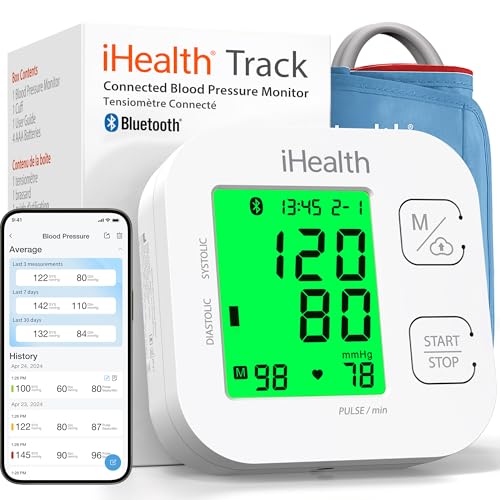
Home Blood Pressure Monitor
Why we like it: if you're curious what heat exposure is actually doing to your own numbers — during a session or over weeks of regular use — a home monitor gives you a real baseline instead of guessing from a wellness-blog claim.
Check Price on Amazon →A sauna session goes faster with a great story in your ears — start a free Audible trial and get your first audiobook free.
Does sauna actually improve vascular health long-term?
The best available evidence says no, not measurably. A 2025 systematic review and meta-analysis in the American Journal of Preventive Cardiology (Hamaya et al.) pooled 20 randomized controlled trials of passive heating interventions — including 8 dry-sauna and 3 traditional Finnish-sauna trials — against cardiometabolic and vascular outcomes. The pooled result for flow-mediated dilation, the standard test of how well your arteries widen in response to increased blood flow, was essentially null (95% CI crossing zero). Pulse-wave velocity, a standard measure of arterial stiffness, showed the same null pattern.
A dedicated sauna-specific trial backs this up. Debray and colleagues (Journal of Applied Physiology, 2023) ran an 8-week RCT in 41 adults with stable coronary artery disease, 4 sauna sessions a week at 79°C. Brachial flow-mediated dilation barely moved — 4.09% to 4.24% in the sauna group versus 4.00% to 4.10% in controls (p=0.95 for interaction) — even though the sauna group showed confirmed heat acclimation (lower resting core temperature, improved sweating response). Regular sauna use changed how their bodies handled heat. It did not measurably change their vascular function.
Can sauna help if you already have poor circulation?
There’s one real, sauna-specific trial worth knowing — and it points the other direction from “avoid sauna if your circulation is already bad.” Tei and colleagues (Journal of the American College of Cardiology, 2007) studied patients with peripheral artery disease (PAD) using Waon therapy — 60°C dry-heat sauna, 15 minutes daily for 10 days — and reported improved ankle-brachial index, longer 6-minute walk distance, and better leg blood flow by laser Doppler, with rest pain easing in every patient in the study.
That’s a genuinely encouraging, real finding. It’s also a small, preliminary trial that later reviews explicitly flag as needing a larger confirmatory study before it counts as established treatment evidence — not a green light to self-treat diagnosed PAD with sauna instead of medical care, but a real reason not to assume sauna is automatically risky for someone with circulation problems either.
What actually makes sauna risky for circulation-related conditions
The genuine contraindications are narrower — and different — than the blanket “skip sauna if you have circulation issues” advice common on wellness sites. A 2025 review in Frontiers in Cardiovascular Medicine lists the real reasons to check with a doctor first: unstable angina, decompensated heart failure, severe aortic stenosis, active infection, and a documented risk of orthostatic hypotension — a blood-pressure drop on standing — in people taking blood-pressure medication, since heat exposure already lowers blood pressure on its own. PAD itself isn’t on that list; the Waon-therapy trial above found benefit, not harm, under monitored conditions.
Sauna and circulation: what’s actually proven
| Claim | What the evidence shows |
|---|---|
| Sauna increases circulation by 50-70% | Misleading framing — that’s the share of an already heat-elevated cardiac output redirected to skin during a session, not a 50-70% boost to total circulation (Rowell, 1983; Vuori, 1988) |
| Regular sauna improves endothelial function / arterial stiffness | Not supported — 2025 pooled meta-analysis of 20 RCTs found no significant effect on flow-mediated dilation or pulse-wave velocity (Hamaya et al.) |
| Sauna could help PAD/leg circulation specifically | One small, preliminary trial found real improvement (Tei et al., 2007) — encouraging but not yet confirmed at scale |
| Sauna is unsafe if you have any circulation problem | Overstated — real contraindications are narrower (unstable angina, decompensated heart failure, severe aortic stenosis, BP-medication timing), not circulation issues broadly |
| ”63% lower sudden cardiac death risk” with frequent sauna use | Real, correctly cited to Laukkanen et al., 2015 — but that’s a mortality-risk finding, not a circulation measurement |
The bottom line
The “sauna boosts circulation by 50-70%” claim isn’t fabricated — it’s a real physiological finding about how much blood gets redirected to your skin during a session — but it’s being sold as something it isn’t: a lasting upgrade to your vascular system. The best trial evidence available, a 2025 meta-analysis of 20 RCTs and a dedicated 8-week sauna trial in cardiac patients, found no measurable improvement in endothelial function or arterial stiffness from regular use. If you already have a circulation-related diagnosis, the real caution list is narrower than most wellness content suggests — talk to your doctor about your specific condition and any blood-pressure medication timing, rather than assuming sauna is either a cure or automatically off-limits.
Curious about the cardiovascular outcome with the strongest sauna research behind it? Our sauna and blood pressure guide covers the same Finnish cohort data in depth. Dealing with a specific joint or muscle issue instead? Sauna for joint pain breaks down what heat therapy is actually shown to help. New to sauna in general? Sauna for beginners covers how to start a safe routine.
🛒 Top Picks from This Guide


Browse all our picks →🔥 Today's deals →
Product prices and availability are accurate as of the date/time indicated on each product and are subject to change. Any price and availability information displayed on Amazon.com at the time of purchase will apply to the purchase of this product. As an Amazon Associate we earn from qualifying purchases.