Sauna and Blood Pressure: What the Research (and the Risk) Actually Says (2026)
By IceColdTubs · Updated September 4, 2026
Quick Answer: Finnish cohort research (Zaccardi & Laukkanen et al., American Journal of Hypertension, 2017) found men who sauna’d 4-7 times a week had 47% lower long-term risk of developing hypertension than infrequent users — but that’s a 24.7-year population trend, not a same-day effect. A single session does the opposite short-term: blood pressure rises somewhat during the heat, then drops below baseline afterward (one study recorded 137/82 → 130/75 mmHg post-session), which is exactly why standing up too fast can cause dizziness. Anyone on diuretics or vasodilators, or with uncontrolled hypertension or a recent cardiac event, should get a doctor’s sign-off first — the risk isn’t hypothetical, it’s a documented interaction.
Sauna marketing loves to cite “lowers blood pressure” as a blanket benefit. The honest picture has two timelines that point in different directions: real long-term population evidence for lower hypertension risk with frequent use, and a real short-term blood pressure swing during and after every single session that deserves its own caution — especially if you’re already managing blood pressure with medication.
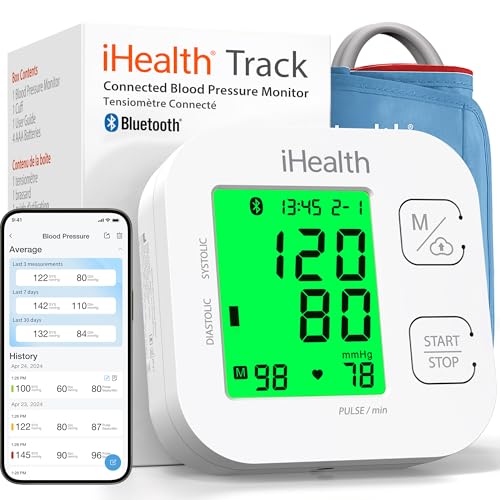
Home Blood Pressure Monitor
Why we like it: if you're starting a sauna habit while managing blood pressure, a $25-40 upper-arm monitor lets you actually see your own before/after numbers instead of guessing.
Check Price on Amazon →Tracking your numbers before your first few sessions? Try Prime free for 30 days and get fast shipping on a monitor plus the rest of your sauna setup.
The long-term evidence: frequent sauna use and lower hypertension risk
The strongest data here comes from the Kuopio Ischaemic Heart Disease Risk Factor (KIHD) cohort in Eastern Finland — the same population behind much of the widely-cited Finnish sauna-cardiovascular research. Zaccardi, T. Laukkanen, Willeit, Kunutsor, Kauhanen and J.A. Laukkanen followed 1,621 men with no hypertension at baseline for a median of 24.7 years, publishing in the American Journal of Hypertension (2017). Of that group, 251 men (15.5%) went on to develop hypertension.
Compared with men who sauna’d once a week or less, the 4-7 times per week group had a hazard ratio of 0.53 (95% CI 0.28-0.98) — statistically significant, and roughly a 47% relative reduction in the risk of developing hypertension over that follow-up period. The 2-3x/week group trended in the same direction (HR 0.83) but didn’t reach statistical significance.
Two honest caveats worth stating plainly: this study was men only, and it’s observational, not a randomized trial. It shows that frequent sauna users developed hypertension at a much lower rate over decades — it can’t fully rule out that men who were already healthier or more active also happened to sauna more often. That’s a real association from a large, long-running, well-regarded cohort, not proof that sauna sessions alone caused the difference.
What randomized trials add — and where they disagree with the cohort data
The Zaccardi cohort is observational: it tracks who already saunas and what happens to them, not a controlled experiment. A 2025 systematic review and meta-analysis (Hamaya et al., American Journal of Preventive Cardiology, PROSPERO CRD42024621600) pooled 15 randomized controlled trials on repeated, non-acute passive-heating interventions and blood pressure. The headline result is more modest than the cohort data alone implies: the overall pooled effect on systolic blood pressure wasn’t statistically significant (-2.46 mmHg, 95% CI -5.02 to 0.10 — the interval crosses zero). But splitting the trials by heating type changed the picture: whole-body “systemic” heating (the kind an actual sauna session delivers, not a localized heat pad) produced a statistically significant -4.11 mmHg drop in systolic pressure, and trials in populations with existing coronary risk found a significant -2.52 mmHg reduction. The authors’ own caveat matters too — high heterogeneity and generally small, lower-quality trials limit how confident anyone should be in a precise number. Read together with the Finnish cohort, the honest summary is: the RCT evidence for sauna itself lowering blood pressure over time is real for whole-body heating specifically, but smaller and less certain than the striking 47% hypertension-risk-reduction headline alone suggests.
What actually happens to your blood pressure during one session
Separate from the decades-long trend above, a single sauna session has its own, shorter-timeline blood pressure story — and it moves in two directions. During active heat exposure, blood pressure tends to rise somewhat as the cardiovascular system works to move blood toward the skin for cooling. After you step out and start cooling down, blood pressure typically drops below your resting baseline — a controlled sauna study recorded systolic pressure falling from 137 to 130 mmHg and diastolic from 82 to 75 mmHg, with the lower reading holding through a 30-minute recovery period.
That post-session dip is a normal, generally healthy vascular response in most people — it’s part of why regular sauna use is linked to the long-term benefits above. But it’s also the direct mechanical reason some people feel lightheaded leaving the sauna, covered next.
Standing up too fast: orthostatic hypotension
Mayo Clinic defines orthostatic hypotension as a blood pressure drop of 20 mmHg or more systolic, or 10 mmHg or more diastolic, within about three minutes of standing up — the clinical explanation for the head-rush or near-faint feeling some people get rising off a hot bench. Sweating during a sauna session reduces circulating blood volume, and per Mayo Clinic, that volume loss makes the normal standing-up blood pressure dip more pronounced than it would be otherwise.
The fix doesn’t require skipping the sauna — it requires standing up the way most sauna-safety guides already recommend: sit upright for a moment before rising, then stand slowly rather than popping straight up. That single habit change addresses the mechanism directly.
If you’re on blood pressure medication
The interaction here has a real, specific mechanism rather than being a vague “check with your doctor” disclaimer. Sauna heat causes vasodilation — blood vessels widen — and sweating reduces blood volume; both effects lower blood pressure on their own. Diuretics and vasodilators do the same thing pharmacologically. Stack a hot sauna session on top of either drug class, and the Mayo Clinic Proceedings review of sauna bathing evidence (Laukkanen & Laukkanen, 2018) specifically flags that combination as worth discussing with a physician before starting a sauna habit — the concern is an exaggerated blood pressure drop, not a vague generic caution.
This doesn’t mean sauna use is automatically off-limits if you take blood pressure medication. Plenty of people on these drug classes sauna safely with a doctor’s awareness of the habit. The honest move is naming your specific prescriptions at your next appointment, not assuming either that it’s fine or that it’s forbidden.
Sauna’s slow build vs. cold plunge’s fast spike
If you’re weighing a full contrast-therapy setup, it’s worth knowing that sauna and cold plunge affect blood pressure on very different timelines. Sauna’s short-term swing is gradual — a rise during heat, a modest dip afterward. Cold water immersion is the opposite: research building on physiologist Michael Tipton’s cold shock work has recorded mean blood pressure spiking from a resting 130/76 mmHg to 175/93 mmHg within the first minute of cold immersion — a much sharper, faster jolt than anything a sauna session produces. Our cold plunge after surgery guide covers that spike in more depth if you’re combining both modalities.
| During the session | Right after | Long-term (regular use) | |
|---|---|---|---|
| Sauna | Rises somewhat | Drops below baseline (e.g. 137/82 → 130/75 mmHg) | 47% lower hypertension risk at 4-7x/week (Zaccardi et al., 2017) |
| Cold plunge | Spikes sharply (130/76 → 175/93 mmHg in <1 min) | Returns toward baseline within minutes | No equivalent long-term hypertension-incidence study exists |
Who should check with a doctor first
The contraindications that consistently show up across cardiac-rehabilitation and sauna-safety research are unstable angina, a heart attack within the past 4-6 weeks, severe aortic stenosis, decompensated heart failure, and uncontrolled or unstable hypertension. These aren’t from one single named guideline — they’re the recurring set referenced across cardiovascular sauna literature, including the Mayo Clinic Proceedings review cited above. If your blood pressure isn’t currently well-managed, or any of those conditions apply, that’s a call for your cardiologist, not a judgment call to make solo at the sauna door.
It’s also worth knowing how common the underlying condition is: per CDC/NCHS data (Data Brief No. 511, October 2024, based on NHANES Aug 2021-Aug 2023), 47.7% of US adults have hypertension — 50.8% of men and 44.6% of women — and only 20.7% of those with hypertension have it controlled below 130/80. That’s nearly half the adult population for whom “does sauna affect my blood pressure” isn’t a hypothetical question.
By the numbers
- 47% lower long-term hypertension risk at 4-7 sauna sessions/week vs. ≤1x/week, in a 1,621-man, 24.7-year Finnish cohort (Zaccardi et al., American Journal of Hypertension, 2017) — men only, observational.
- -4.11 mmHg systolic. The significant blood-pressure drop from whole-body heating specifically, pooled across 15 RCTs in a 2025 meta-analysis (Hamaya et al., American Journal of Preventive Cardiology) — the overall pooled effect across all heating types wasn’t statistically significant.
- 137/82 → 130/75 mmHg. A recorded systolic/diastolic drop following a single sauna session, holding through a 30-minute recovery window in a controlled study.
- 20 mmHg systolic / 10 mmHg diastolic. Mayo Clinic’s threshold for orthostatic hypotension — the standing-up blood pressure drop that sauna-induced fluid loss can worsen.
- 47.7% of US adults have hypertension, per CDC/NCHS data (Data Brief No. 511, 2024) — and only 20.7% of those have it controlled.
- 130/76 → 175/93 mmHg in under a minute. For comparison, the far sharper acute spike from cold water immersion (Tipton cold-shock-response research), already covered in our cold plunge benefits guide.
The bottom line
Regular sauna use has real, if imperfect, evidence for lower long-term hypertension risk — a 24.7-year Finnish cohort found 47% lower incident hypertension at 4-7 sessions a week, though it’s observational and men-only. That long-term trend doesn’t cancel out the short-term reality: every session causes blood pressure to rise during the heat and dip afterward, which is exactly why standing up slowly matters and why diuretics or vasodilators can amplify the drop. If you’re on blood pressure medication or managing a cardiac condition, loop in your doctor before making sauna a habit — the interaction here is mechanistic and real, not a boilerplate caution.
New to heat exposure generally? Our sauna for beginners guide covers safe session length and pacing. Managing diabetes alongside a heat or cold habit? Our guide to sauna and cold plunge for diabetics covers a related autonomic-nervous-system risk. Drinking around your sauna sessions? Sauna and alcohol covers a separate but related cardiovascular risk worth knowing about. Navigating hot flashes too? Our guide to sauna and menopause covers how heat and hormone changes interact. Managing chronic pain instead? Our sauna for fibromyalgia guide covers what the actual clinical trials tested. Wondering about circulation and varicose veins specifically? Our cold plunge for varicose veins guide covers a real mechanistic reason cold may not “shrink” an established varicose vein the way marketing implies. Curious about the “sauna flushes your lymphatic system” claim specifically? Our sauna for lymphatic drainage guide covers why that claim runs ahead of the actual evidence — and why lymphedema guidance actually cautions against prolonged heat exposure. Wondering if sauna does anything for cholesterol too? Our sauna and cholesterol guide covers the same Finnish cohort data plus the pooled trial evidence on lipid panels specifically. Curious whether sauna actually improves circulation, not just blood pressure? Our sauna for circulation guide covers why the popular “50-70% increase” claim is a real number wearing the wrong label. Pregnant and weighing the same cardiovascular caution? Our sauna and pregnancy guide covers ACOG’s core-temperature threshold and the actual neural-tube-defect research.
🛒 Top Picks from This Guide


Browse all our picks →🔥 Today's deals →
Product prices and availability are accurate as of the date/time indicated on each product and are subject to change. Any price and availability information displayed on Amazon.com at the time of purchase will apply to the purchase of this product. As an Amazon Associate we earn from qualifying purchases.