Sauna for Fibromyalgia: What the Clinical Trials Actually Tested (2026)
By IceColdTubs · Updated September 7, 2026
Quick Answer: Two real sham-controlled clinical trials found that whole-body infrared hyperthermia — a supervised medical heat treatment, not a regular sauna session — significantly reduced fibromyalgia pain scores versus sham treatment, with effects still measurable 30 weeks later. That’s genuine evidence heat therapy can help, but it doesn’t prove a consumer sauna session delivers the same result, since the trials used precisely controlled medical equipment. The other half of the honest answer: cold plunge deserves real caution here, since 30-50% of fibromyalgia patients report Raynaud’s-like cold sensitivity, well above the general population’s rate. With roughly 4 million US adults affected (CDC), this is a condition where sauna shows real promise and cold plunge needs a second thought.
Fibromyalgia and contrast-therapy products get recommended to each other constantly in wellness content, but the honest picture is more one-sided than most of that content admits: there’s real clinical evidence behind heat therapy, and a real reason for caution around cold exposure. Here’s what the actual trials tested, what they didn’t, and where the gaps are.
What the research actually shows
The strongest evidence comes from two sham-controlled trials of water-filtered infrared-A whole-body hyperthermia (wIRA-WBH) — a supervised medical heat treatment that’s the closest real analog to sauna use in the fibromyalgia literature. Langhorst et al., published in the Journal of Clinical Medicine (2023), randomized 41 fibromyalgia patients to 6 sessions over 3 weeks of either active wIRA-WBH (core temperature raised to a target of 38.5°C, actually achieving 38.7±0.2°C, for 60-minute sessions) or a sham treatment using insulating foil that didn’t raise core temperature. The active group’s pain scores (Brief Pain Inventory, 0-10 scale) were significantly lower than sham at week 4 (3.83 vs 4.76, p=0.015) and the effect held through week 30 (4.59 vs 5.80, p=0.002) — 10 of 21 active-group patients reported a clinically meaningful 30%+ pain reduction, versus just 4 of 20 in the sham group.
A larger, earlier trial — Brockow et al., Clinical Journal of Pain (2007), 139 patients, twice-weekly sessions over 3 weeks, core temperature raised to 38.1°C — found similarly significant pain improvements (p<0.001 on the affective pain scale, p=0.001 on the sensory scale) when wIRA-WBH was added to standard multimodal rehabilitation, versus rehab alone. About 20% of patients had transient side effects.
The distinction that actually matters: this isn’t your home sauna
Both trials are genuine, peer-reviewed, sham-controlled evidence — a real step above the observational or self-reported data most wellness-heat claims rest on. But it would be dishonest to present them as proof that a regular sauna session helps fibromyalgia. wIRA-WBH is a supervised medical procedure: specialized equipment holds core body temperature at a precise target for a set duration, with continuous monitoring throughout. A traditional Finnish sauna or infrared cabin heats you less precisely, isn’t temperature-monitored the same way, and no study has directly tested a standard consumer sauna session against fibromyalgia symptoms.
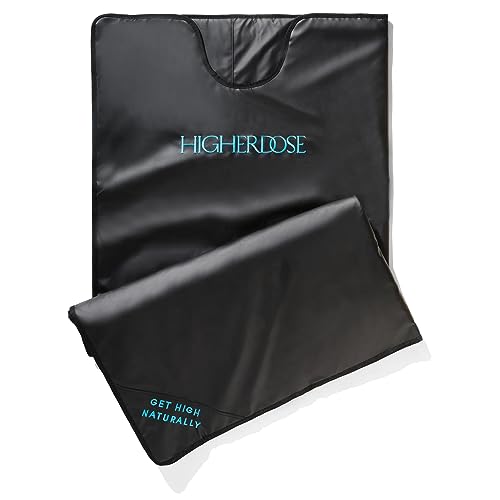
Infrared Sauna Blanket
Why we like it: lower, more controllable heat than a full cabin — a gentler way to test how your body responds to heat exposure before committing to longer full-sauna sessions. See our best sauna blanket picks for specific models.
Check Price on Amazon →Tracking how your pain responds session to session is easier with a simple log close at hand — try Prime free for 30 days and get fast shipping on a notebook or a sauna thermometer to pair with it.
That gap doesn’t make sauna use pointless for fibromyalgia — the underlying mechanism (controlled heat exposure improving pain and function) has real trial support — but it does mean the sensible framing is “promising, unproven for consumer sauna specifically,” not “clinically proven to work.”
A closer real-world analog: Waon therapy
The wIRA-WBH trials above use medical hyperthermia chambers, but there’s an older, smaller trial that used actual far-infrared sauna equipment — a genuinely closer analog to a consumer setup. Matsushita et al., published in Internal Medicine (2008, Kagoshima University, n=13 women meeting ACR fibromyalgia criteria), tested Waon therapy: 15 minutes in a far-infrared dry sauna held at 60°C, immediately followed by 30 minutes wrapped in a blanket in a separate room kept at 26-27°C. Pain (VAS) and fibromyalgia-impact (FIQ) scores dropped significantly (p<0.01) after the first session (11-70% reduction) and stabilized at a 20-78% reduction after 10 sessions, with improvements holding through follow-up.
This is a real step closer to “an actual sauna” than the wIRA-WBH trials — 60°C is within the range plenty of infrared cabins reach. But two honest caveats keep it from being the slam-dunk it sometimes gets presented as in wellness content: it wasn’t sham-controlled (no placebo arm to rule out expectation effects, unlike Langhorst et al.’s design), and the protocol’s 30-minute post-sauna blanket-wrapped rewarming phase in a separate room is a specific, deliberate part of Waon therapy — not something most people do after toweling off from a home sauna session. Both trials point the same direction; neither one alone proves a casual home sauna habit replicates a clinical protocol.
The claim that doesn’t hold up: heat and substance P
One mechanism claim circulates in wellness content: that heat therapy lowers substance P, a neuropeptide linked to pain signaling that’s genuinely elevated in fibromyalgia patients. Russell et al.’s 1994 study in Arthritis & Rheumatism found cerebrospinal-fluid substance P at 2-3 times normal levels in fibromyalgia patients, a finding replicated in roughly four follow-up studies — that part is solid. But no study we found tested whether heat or sauna exposure actually lowers substance P in fibromyalgia patients. The wIRA-WBH trials measured pain scores and quality-of-life outcomes, not substance P directly. Treat “heat lowers substance P” as an unverified mechanism someone constructed by connecting two real but separate facts, not an established finding.
Why cold plunge needs a second thought here
This is the part most sauna-and-cold-plunge content skips, since it cuts against selling both products: cold exposure carries a real, biologically grounded caution for fibromyalgia patients that heat exposure doesn’t. An estimated 30-50% of people with fibromyalgia report Raynaud’s-phenomenon-like cold sensitivity — an exaggerated blood-vessel-constriction response to cold that can trigger pain, numbness, or color changes in the fingers and toes. For comparison, Raynaud’s phenomenon affects only about 4-15% of the general US population on its own.
| Modality | Trial evidence in fibromyalgia | Honest caveat |
|---|---|---|
| Whole-body infrared hyperthermia (medical) | 2 sham-controlled RCTs, significant pain reduction | Supervised medical equipment, not a consumer sauna |
| Consumer sauna (traditional/infrared) | 1 small trial using real sauna equipment (Waon therapy, n=13) | Not sham-controlled; includes a 30-min post-sauna rewarming step most home sessions skip |
| Cold plunge / cold exposure | No direct fibromyalgia trial found | 30-50% of patients report Raynaud’s-like cold sensitivity — real reason for caution |
We didn’t find a single official fibromyalgia organization statement that flatly instructs patients to avoid cold plunge, so we’re not citing one that doesn’t exist. But the underlying cold-sensitivity literature is a legitimate, biologically grounded reason to be cautious: if you have fibromyalgia and want to try cold exposure, start brief and mild rather than jumping to a full ice-bath protocol, and stop immediately if you notice unusual color changes or sharp pain in your extremities. Our cold plunge benefits guide covers general safety pacing that applies here too, but doesn’t substitute for this condition-specific caution.
Medication and heat: what’s actually documented
Pregabalin, duloxetine, and milnacipran are the three FDA-approved fibromyalgia medications. We looked for FDA labeling or a peer-reviewed source documenting a specific heat- or sauna-related interaction with any of the three and didn’t find one — despite some affiliate wellness content citing specific heart-rate thresholds (like “85% of age-predicted max”) as if they were an established clinical rule. Those numbers don’t trace back to a cited study anywhere we could find, and we’re not repeating them here. The honest, defensible position: a heat-intolerance effect is pharmacologically plausible with these medications but isn’t clinically documented for sauna use specifically — talk to your prescriber before starting regular sessions rather than following an unsourced numeric protocol from a blog.
Sauna and fibromyalgia, by the numbers
- 3.83 vs 4.76 (p=0.015). Pain scores (0-10 Brief Pain Inventory) in the active vs. sham whole-body-hyperthermia group at 4 weeks, Langhorst et al. 2023 — a real, statistically significant sham-controlled result.
- 10 of 21 vs 4 of 20. Patients reporting a clinically meaningful 30%+ pain reduction, active vs. sham group, same trial.
- 20-78%. Pain and impact-score reduction after 10 sessions of Waon therapy (actual far-infrared sauna, 60°C/15min + 30min blanket-wrapped rewarming), Matsushita et al. 2008, n=13 — the closest trial to real sauna equipment, but not sham-controlled.
- 30-50%. The estimated share of fibromyalgia patients reporting Raynaud’s-like cold sensitivity, well above the 4-15% general-population rate for Raynaud’s phenomenon.
- 1.75% of US adults (~3.94 million). Fibromyalgia prevalence per Walitt et al.’s 2015 analysis of NHIS data, climbing to 7.4% among women — the peer-reviewed figure behind CDC’s rounded “~4 million” estimate.
The bottom line
- Two real sham-controlled trials found whole-body infrared hyperthermia significantly reduced fibromyalgia pain — genuine evidence, with effects measurable out to 30 weeks in one trial.
- Those trials used supervised medical equipment, not a consumer sauna — the closest real evidence we have, but not proof a home sauna session replicates the result.
- “Heat lowers substance P” is an unverified claim — the elevated-substance-P finding and the heat-therapy trials are both real, but no study connects the two directly.
- Cold plunge deserves real caution for fibromyalgia patients — 30-50% report Raynaud’s-like cold sensitivity, well above the general population’s rate.
- No documented sauna-specific interaction exists for the three FDA-approved fibromyalgia drugs — a heat-intolerance risk is plausible but not clinically established; ask your prescriber rather than trusting an unsourced blog rule.
If you’re weighing sauna against cold exposure more broadly, our sauna vs cold plunge guide covers the general tradeoffs, and our sauna for beginners guide covers safe session pacing if you’re starting from zero. For another condition where the research is genuinely mixed, see our sauna and blood pressure guide. Living with a joint condition instead? Our cold plunge for arthritis guide covers a similar Raynaud’s-related caution for rheumatoid arthritis specifically, and our sauna for joint pain guide covers the same infrared-sauna trial evidence for a related autoimmune joint condition. Dealing with heel pain instead of widespread pain? Our sauna for plantar fasciitis guide covers the actual heat-therapy trial evidence for that specific condition. Managing chronic pelvic pain instead? Our sauna for endometriosis guide covers a related evidence gap and the one pilot trial now testing cold immersion for that condition directly. Want the full detail on that cold-plunge caution mentioned above? Our cold plunge for fibromyalgia guide covers the cryochamber trial evidence and a pilot study on blunted cold-response in fibromyalgia patients.
🛒 Top Picks from This Guide


Browse all our picks →🔥 Today's deals →
Product prices and availability are accurate as of the date/time indicated on each product and are subject to change. Any price and availability information displayed on Amazon.com at the time of purchase will apply to the purchase of this product. As an Amazon Associate we earn from qualifying purchases.